
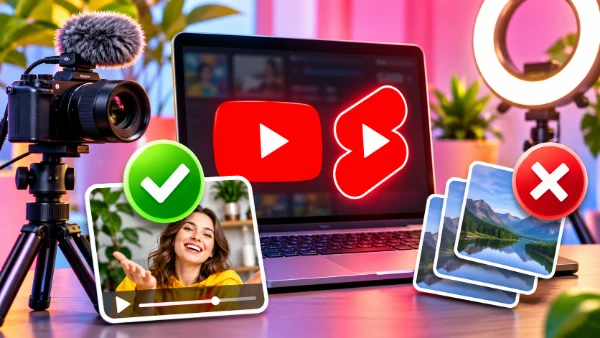
Why YouTube Tightened Shorts Originality Requirements in October 2026 and What It Means for Creators
On 1 October 2026, YouTube announced changes to its Shorts recommendation systems, placing greater emphasis on original videos and reducing the potential reach of content republished without meaningful creative contributions. The announcement addressed a growing problem for video creators: accounts that build audiences by copying successful clips, making minor alterations and uploading them as their own material. For channels producing original entertainment, educational videos, commentary or independent analysis, the update could create better opportunities to reach viewers. However, it also raises practical questions about reaction videos, podcast highlights, compilations and content produced with artificial intelligence. The new approach does not prohibit every use of existing footage or introduce an entirely separate set of monetisation rules. Instead, it reinforces a distinction that creators increasingly need to understand: changing the appearance of somebody else’s video is not necessarily the same as creating something original.
What Changed in YouTube Shorts Recommendations in October 2026?
The October announcement came directly from TeamYouTube under the title “Prioritizing original content on Shorts”. YouTube confirmed that its recommendation systems were being updated to favour videos offering original value and limit the distribution of material copied from other creators without significant additions. The company specifically warned that channels primarily aggregating or re-uploading other people’s videos could receive less exposure in the Shorts feed. This is an important distinction because the change concerns recommendations rather than an automatic removal process. A video may remain publicly available while receiving fewer recommendations, meaning creators should not assume that the absence of a copyright warning or policy strike guarantees strong visibility.
The decision addresses the widespread circulation of identical or nearly identical clips across multiple accounts. A memorable interview, sporting achievement, television scene or viral moment can generate hundreds of reposts, many featuring little more than different subtitles, background music or changes to the framing. Such videos often compete for the same audience attention as the original publication, even when the account republishing the material has contributed almost nothing to its creation. YouTube’s updated approach is intended to give original work a better opportunity to reach viewers. It also reflects the company’s wider interest in maintaining variety in recommendations instead of repeatedly presenting audiences with familiar footage distributed by unrelated accounts.
YouTube did not publish a precise formula explaining how much editing is necessary for a Short to qualify as sufficiently original. There is no officially announced minimum number of original seconds, required percentage of newly recorded footage or guaranteed amount of commentary that makes a video acceptable for recommendations. Instead, the company emphasised meaningful contributions such as original observations, distinctive editing and independent storytelling. This makes the creator’s purpose more important than the number of visual changes. A borrowed clip covered with animated captions may still offer little additional value, while a carefully selected extract accompanied by substantial analysis can serve a genuinely different purpose. The distinction depends on the finished content rather than a simple checklist of editing effects.
Why YouTube Is Prioritising Creative Value Over Minor Editing Changes
The difference between ordinary editing and meaningful transformation becomes clearer when examining common Shorts formats. Consider an account that downloads a popular interview, crops it into a vertical format, adds subtitles and republishes the most dramatic moment. Although some editing has taken place, viewers are still receiving essentially the same interview. A creator who uses part of that conversation to explain its background, challenge a particular claim or compare it with another documented statement produces a different experience. The additional commentary gives the clip a purpose beyond redistribution. This is the type of distinction YouTube wants creators to consider when developing videos that include material recorded or published by somebody else.
The October 2026 announcement also follows earlier changes to YouTube’s monetisation guidance. On 15 July 2025, YouTube renamed its “repetitious content” policy to “inauthentic content” and clarified its treatment of repetitive and mass-produced videos. The company explained that such material was already unsuitable for monetisation under existing rules. It also confirmed that the separate reused-content policy, which covers areas including commentary, compilations and reaction videos, had not changed. These earlier clarifications focused on eligibility for earning revenue through the YouTube Partner Programme. The October 2026 development is different because it explicitly addresses how original and republished videos are treated within Shorts recommendations. Creators therefore need to distinguish between receiving distribution, satisfying monetisation requirements and complying with copyright law.
Originality does not necessarily require expensive equipment, professional production or an entirely new subject. A creator explaining a familiar topic through personal experience may offer more meaningful value than a heavily edited compilation assembled from existing videos. Similarly, two people can cover the same news story while producing substantially different content through their reporting, arguments or presentation. YouTube’s guidance does not suggest that every Short must introduce a previously unknown idea. Instead, the creator should contribute something recognisable that justifies the existence of a separate video. This could involve a personal explanation, new information, practical testing, critical interpretation or a distinctive narrative. The important consideration is whether viewers receive more than a repackaged version of material already available elsewhere.
How the October 2026 Changes Affect Shorts Creators and Their Channels
Channels built around reposting popular clips face the clearest potential consequences. Accounts that regularly upload fragments from podcasts, livestreams, films, television programmes or other social media channels without substantial changes may experience reduced distribution. YouTube specifically identified channels whose main activity involves aggregating or republishing other creators’ videos. However, the announcement did not establish that every Short containing external footage would automatically be restricted. A channel producing independent commentary may still have legitimate reasons to include third-party clips. The difference lies in the contribution surrounding those clips and whether the channel primarily creates new material or depends on redistributing existing work.
For creators who regularly record original footage or develop their own explanations, the changes could improve their opportunities to compete for attention. When multiple accounts distribute essentially identical material, the original creator may compete with copies of the same video. Giving greater priority to original work could help reduce that imbalance. Nevertheless, YouTube has not promised higher views for every original Short. Recommendations continue to depend on numerous factors, including viewer interests, viewing history and engagement. A video can be entirely original yet perform poorly because its subject does not interest the intended audience or because viewers quickly lose attention. The update changes the emphasis on originality without eliminating the importance of producing material people actually want to watch.
Another important consequence concerns how creators interpret changes in channel performance. A decline in views after October 2026 does not automatically prove that YouTube has identified a channel as insufficiently original. Shorts distribution naturally changes as audience interests develop, competing videos attract attention and publishing habits vary. YouTube has not introduced a public originality score that creators can use to determine precisely how this recommendation adjustment affects individual uploads. Channels experiencing weaker results should therefore examine patterns across several videos rather than blaming a single policy announcement. Comparing audience retention, viewing behaviour, traffic sources and differences between content formats may provide useful information, although these measurements cannot reveal every factor influencing YouTube’s internal recommendations.
What the Changes Mean for Reaction Videos, Reused Clips and AI Content
Reaction videos and commentary formats remain possible, but their creative contribution needs to be clear. YouTube’s existing monetisation guidance recognises content that transforms borrowed material through critical discussion, explanation or an additional storyline. A creator analysing a football match, for example, might use short extracts to explain defensive decisions, individual positioning or the circumstances surrounding a goal. This offers viewers an interpretation that goes beyond watching the original match footage. By comparison, uploading an unchanged goal accompanied only by a new soundtrack contributes very little. Similarly, a reaction video in which somebody offers detailed observations differs considerably from one where the original recording plays almost uninterrupted alongside occasional facial expressions. These examples illustrate meaningful transformation rather than guaranteeing recommendation performance or monetisation approval.
Creators who use artificial intelligence should also distinguish between the technology used to produce a Short and the originality of the finished result. The October announcement did not introduce a blanket restriction on AI-generated videos. AI tools can assist with editing, illustrations, voice production and other creative tasks, but their use does not automatically make a video original. For instance, a creator who researches a historical event, writes an independent explanation and uses AI-generated illustrations may produce content with a clear editorial purpose. By contrast, repeatedly publishing nearly identical videos assembled from interchangeable scripts, stock images and automated narration could raise concerns under YouTube’s existing rules concerning repetitive or mass-produced material. Creators must also follow applicable disclosure requirements when realistic altered or synthetic content could mislead viewers about people, events or situations.
Copyright remains a separate issue from originality and recommendation eligibility. A creator may receive permission to use footage but still produce a video that offers insufficient independent value under YouTube’s monetisation guidance. Conversely, adding substantial commentary does not automatically establish the legal right to use copyrighted material. The position depends on permissions, the nature of the footage and relevant copyright law. YouTube also has specific rules concerning non-original Shorts views and revenue-sharing eligibility, including examples involving unedited third-party clips and compilations without meaningful original additions. These rules should not be confused with the October recommendation update. A channel must consider whether its content is legally usable, whether it meets monetisation requirements and whether it provides enough original value to compete effectively for recommendations.

How YouTube Shorts Creators Can Adapt Their Content Strategy in 2026
The most practical response to the October update is to begin each video with a clear creative purpose rather than selecting popular footage and searching for ways to alter it. Creators should consider what their audience will learn, understand or experience that would not be available from watching the source material alone. For an educational channel, this might involve explaining a difficult subject through an original example. A cooking creator could test a popular recipe and discuss which steps actually influence the result. Someone covering consumer technology might compare a product’s advertised features with practical observations. These approaches do not require complicated production techniques. Their value comes from the creator’s contribution, which remains identifiable even when familiar subjects or widely used formats are involved.
Channels specialising in podcast highlights, interviews or news extracts may need to reconsider how they construct individual videos. Instead of uploading an uninterrupted section of somebody else’s recording, a creator can select a relevant quotation and develop an explanation around it. This might include introducing the context, clarifying a disputed claim, comparing information or explaining why a particular statement matters. The borrowed clip should support the creator’s argument rather than substitute for original work. An introduction followed by a lengthy unaltered extract may still provide limited independent value. A stronger approach is to make commentary and interpretation essential to the video’s meaning, so viewers understand why the creator’s version exists instead of simply watching the original publication.
Creators should also review the wider pattern of their channel’s output. YouTube’s October announcement specifically refers to channels that primarily aggregate or re-upload other people’s work, making publishing habits relevant. A channel containing occasional transformative commentary differs from one publishing dozens of minimally edited clips every day. A useful review would examine which videos were independently recorded, which contain substantial original analysis and which rely almost entirely on existing footage. This does not mean that every older upload must be removed or that repeating a recognisable format is automatically unacceptable. Consistent formats can help audiences understand what a channel offers, provided individual videos contain meaningful differences. The aim should be to develop a recognisable editorial identity rather than produce endless variations of the same material.
How to Maintain Reach, Monetisation Eligibility and Sustainable Audience Growth
YouTube Studio provides several useful measurements for understanding how viewers respond to Shorts, including views, engaged views, audience retention and traffic sources. Creators can use these figures to compare original formats with videos that rely more heavily on external material. For example, a channel previously publishing brief interview highlights could experiment with independently written explanations supported by carefully selected extracts. Results should be assessed across multiple uploads rather than one video, since audience response naturally varies. Better retention or stronger engagement may indicate that a new presentation works more effectively, although neither measurement proves how YouTube’s originality assessment operates. This approach allows creators to make informed editorial decisions without relying on speculation about hidden thresholds or supposed algorithm tricks.
Monetisation requires additional attention because meeting recommendation expectations does not automatically establish eligibility for the YouTube Partner Programme. YouTube’s existing policies distinguish between reused material, inauthentic mass-produced content and videos that provide sufficient independent creative value. When reviewing a channel, YouTube may consider its main subject, popular uploads, recent publications and other material representing the channel’s overall activity. Creators who depend on third-party footage should therefore examine the substance of their contributions across their publishing history. Keeping original scripts, recording files, editing projects and documentation of permissions can also help establish how videos were produced if questions arise. However, retaining such records does not guarantee monetisation approval or prevent copyright disputes, and creators should not present them as substitutes for meeting YouTube’s actual requirements.
The central lesson from October 2026 is that originality now has greater importance within YouTube Shorts recommendations, particularly for channels whose content depends on republishing other people’s work. The announcement does not eliminate reaction videos, prohibit creative use of existing footage or promise automatic success to anyone producing original material. It does, however, make superficial repackaging a less dependable approach to channel growth. Creators who provide recognisable commentary, independent information, personal experience or distinctive storytelling are better aligned with YouTube’s stated priorities. Rather than concentrating on how many edits can be applied to an existing video, the more useful question is what a viewer gains from watching the creator’s version. Building a consistent answer to that question is a more sustainable strategy than relying on copied clips and temporary trends.