
Dark Patterns in Social Media: How Interfaces Push Users Towards Unnecessary Actions
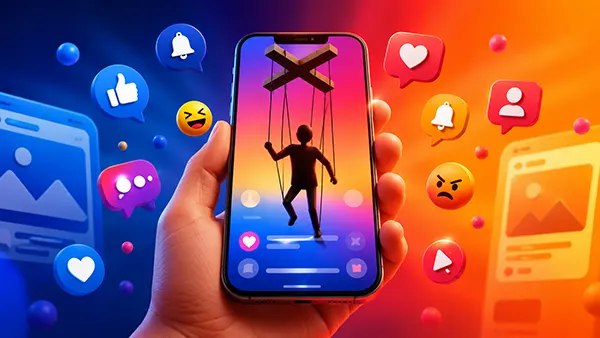
Social media services have become deeply integrated into everyday communication, entertainment, shopping, and news consumption. At the same time, many interface decisions are no longer designed purely for convenience. In 2026, researchers, regulators, and digital rights organisations continue to raise concerns about so-called “dark patterns” — interface techniques created to influence behaviour in ways users may not fully notice. These methods often encourage people to spend more time online, share more personal information, enable unnecessary notifications, or make impulsive purchases and subscriptions. Understanding how these mechanisms work has become an important part of digital literacy and online safety.
How Dark Patterns Work Inside Modern Social Media Interfaces
Dark patterns are interface elements intentionally designed to influence user decisions through psychological pressure, confusion, urgency, or habit formation. In social media applications, these patterns are frequently connected to engagement metrics because longer user sessions generate more advertising revenue and behavioural data. Infinite scrolling feeds, autoplay videos, and algorithmic recommendations are among the most widespread examples used across major social networks in 2026.
One common technique involves creating friction for actions that reduce engagement while making impulsive actions effortless. For example, enabling notifications usually requires one tap, while disabling them may involve several settings menus. Similarly, deleting an account is often more complicated than registering one. Some services still place emotional language near confirmation buttons, encouraging users to reconsider privacy changes or subscription cancellations.
Visual hierarchy also plays a major role in behavioural manipulation. Bright colours, oversized buttons, countdown timers, and animated prompts are frequently used to guide attention towards profitable actions. Meanwhile, privacy options or content filtering tools are often placed in less visible areas of the interface. These design choices may appear minor individually, but repeated exposure can significantly affect user habits over time.
Why Psychological Triggers Make These Interfaces Effective
Social media companies increasingly rely on behavioural science to improve user retention. Features such as intermittent rewards, social validation signals, and unpredictable content delivery activate psychological responses linked to dopamine release and habit reinforcement. Notifications showing new likes, comments, or messages create anticipation, encouraging users to check applications repeatedly throughout the day.
Fear of missing out remains another powerful trigger. Stories that disappear after 24 hours, temporary live streams, and limited-time interactions pressure users into opening applications more frequently. In many cases, the urgency is artificial rather than genuinely necessary. Nevertheless, the design successfully creates emotional tension that increases engagement statistics.
Social comparison mechanisms also contribute to prolonged usage. Visible follower counts, popularity metrics, and recommendation systems encourage users to seek validation through interaction numbers. This may lead individuals to continue posting, scrolling, or responding even when the activity no longer provides meaningful value. Studies published between 2024 and 2026 by European digital wellbeing organisations have linked excessive exposure to these systems with increased stress, distraction, and compulsive online behaviour among younger audiences.
The Most Common Dark Patterns Found on Social Media in 2026
Privacy manipulation continues to be one of the most criticised categories of dark patterns. Many applications encourage users to grant broad access to contacts, microphones, cameras, and location data during registration. Although users technically have a choice, refusal prompts are often framed negatively, suggesting reduced functionality or a poorer experience. In some cases, privacy-friendly settings remain hidden behind several layers of menus.
Subscription-related dark patterns have also become more sophisticated. Some social media services promote premium features through recurring pop-ups, limited free trials, or confusing cancellation procedures. Users may subscribe unintentionally because the interface highlights “continue” buttons while minimising information about future charges. Consumer protection agencies across the European Union have investigated several large technology companies for these practices between 2024 and 2026.
Another widespread issue involves misleading interaction prompts. Certain interfaces blur the distinction between sponsored content and ordinary posts, making advertisements appear similar to personal recommendations. Others use deceptive button placement, where tapping one area unexpectedly triggers purchases, follows, shares, or data permissions. Mobile screen design has amplified this problem because smaller displays reduce the clarity of navigation elements.
How Algorithms Reinforce Compulsive Behaviour
Recommendation systems have become increasingly personalised due to advances in machine learning and behavioural analytics. Social media algorithms analyse viewing time, pauses, clicks, typing speed, and interaction patterns to predict which content is most likely to maintain user attention. While personalisation can improve relevance, it also increases the risk of compulsive scrolling and emotional dependency.
Many users underestimate how strongly algorithms shape their perception of reality. Content feeds are no longer neutral chronological timelines. Instead, they prioritise emotionally intense material, controversial topics, and highly engaging videos because these generate stronger behavioural responses. This creates feedback loops that encourage prolonged consumption while reducing conscious decision-making.
Short-form video feeds represent one of the clearest examples of algorithm-driven engagement engineering in 2026. Platforms continuously optimise transitions between clips to minimise interruption and prevent users from leaving the application. Endless personalised recommendations reduce natural stopping points, making it difficult for people to regulate screen time without external tools or deliberate self-control strategies.

How Users Can Recognise and Reduce the Influence of Dark Patterns
Awareness remains one of the most effective forms of protection against manipulative interface design. Users who understand how behavioural triggers operate are generally better equipped to recognise emotional pressure tactics and avoid impulsive decisions. Paying attention to repeated prompts, artificial urgency, and overly persuasive notifications can help identify when an interface is prioritising engagement over user wellbeing.
Adjusting application settings is another practical step. Disabling non-essential notifications, turning off autoplay features, and limiting personalised advertising permissions can reduce compulsive usage patterns. Many operating systems in 2026 now include advanced digital wellbeing dashboards that allow users to monitor screen time, notification frequency, and application activity in greater detail.
Critical thinking is equally important when interacting with sponsored content, recommendations, or viral trends. Users should verify whether certain actions genuinely benefit them or primarily support commercial objectives. Taking intentional breaks from algorithm-driven feeds may also improve concentration and reduce emotional fatigue associated with constant online interaction.
The Growing Role of Regulation and Ethical Design
Governments and regulatory authorities have increased scrutiny of dark patterns during recent years. The European Union’s Digital Services Act and consumer protection frameworks introduced stricter requirements regarding transparency, consent mechanisms, and misleading interface practices. Several investigations launched in 2025 and 2026 specifically targeted manipulative subscription systems and deceptive advertising disclosures on large social networks.
Alongside regulation, ethical design movements have gained stronger support among developers and digital rights advocates. Some technology companies now publish transparency reports explaining recommendation systems, data usage policies, and engagement metrics. Independent audits of algorithms and interface design are also becoming more common within large technology organisations.
Despite these developments, dark patterns remain widespread because they continue to generate measurable business advantages. As social media competition intensifies, companies face strong financial incentives to maximise engagement and data collection. For users, this means digital literacy will remain essential. Recognising manipulative interface behaviour is increasingly important not only for privacy protection, but also for maintaining healthier relationships with technology in everyday life.